


Breathing Pilates-Style: A Tool to Move Better

We breathe all day long. Without thinking. Without stopping. Without effort. So... why is breathing such a big deal in Pilates?
If you’re new to the practice, you might be surprised by how much emphasis is placed on how, when, and where to breathe. But once you understand the purpose behind it, it all makes sense: breathing well is key to moving better, protecting your body, and connecting to your core.

Joseph Pilates Didn’t Take Breathing for Granted
Joseph Pilates, the creator of the method that bears his name, suffered from respiratory issues as a child. That experience shaped his philosophy — he saw the lungs as bellows that should fill with fresh air and empty completely. Proper breathing was part of what he called the “return to life”: a path to overall health and vitality.

What Makes Breathing in Pilates Different?
Unlike yoga — where belly breathing is often encouraged — in Pilates, the abdomen stays gently engaged as you breathe. That means the breath doesn’t go “into the belly,” but instead expands the sides of the ribs and the lower back, a technique known as lateral breathing.
Imagine your torso like a cylinder, as Pilates instructor Meredith Rogers describes it: The pelvic floor at the base and the diaphragm at the top move up and down with each breath, while the sides of the cylinder (ribs, back, and abdominal muscles) expand and contract gently.
This type of breath allows you to keep your core engaged during movement, protecting the lower back and providing greater stability.
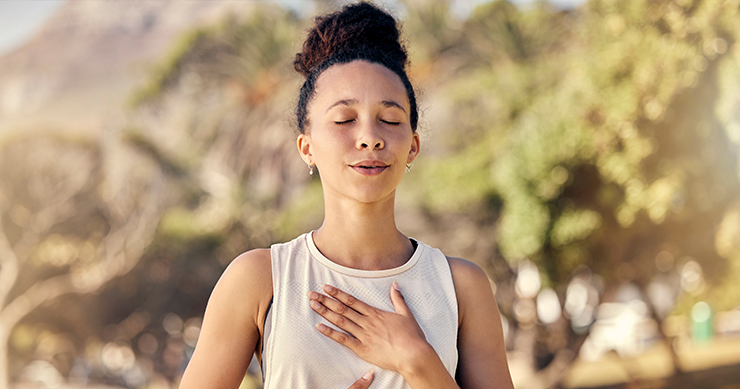
Why Breathe This Way?
Beyond safety, Pilates breathing has several key functions:
Activates the right muscles for each exercise
Provides rhythm and control to your movement
Helps you stay mentally focused and tension-free
Supports elongation and mobility
Connects your attention to the present moment
Exercises like The Hundred use specific breathing patterns (such as inhaling and exhaling in five counts) to coordinate movement and breath. Others — like Spine Twist or Short Box Series — pair exhalation with spinal rotation to enhance the twist.

What If I Don’t Get It Right?
Don’t worry. Breathing in Pilates is something you learn with time. You don’t have to master it on day one. In fact, it’s better to breathe naturally and move with flow than to stop altogether because it’s “not perfect.”
With practice, your body and breath will start to sync effortlessly. And what once felt confusing… will become second nature — and even enjoyable.

Breathing in Pilates isn’t just another instruction. It’s part of the technique, the connection, and the outcome. It’s how you stay present, activate your core, and move with intention and control.
At Mindbody Pilates Studio, we teach you to breathe and move with awareness — no pressure, just progress at your own pace. Because what truly matters isn’t doing it perfectly, but doing it with consistency and care.
Have questions about how to breathe during class? Message us or ask in your next session — we’re here for every inhale… and every exhale.


Comments