


Everything You Need to Know About Postpartum Pilates

Coming back to your body after becoming a mother is a unique process. Your baby is here, your life has changed completely, and somewhere between the fatigue, the new routines, and the emotional waves, you may notice that strange feeling of not fully recognizing your own body.
It’s normal. And it’s much more common than you think.
In this stage of physical and emotional recovery, postpartum Pilates can be a gentle and supportive ally. It’s not about “getting your old body back.” It’s about reconnecting with yourself—strengthening from within and slowly recovering your energy.
Is Pilates good after giving birth?
During the first months, caring for a baby requires strength, stability, and constant physical presence. Holding, feeding, rocking… everything asks for a strong torso and a pelvic floor that can support you.
Postpartum Pilates gives you a safe space to rebuild that foundation. It’s a method that is soft yet deep, designed to strengthen without impact, improve posture, and accompany your recovery step by step.
Benefits of Postpartum Pilates
After pregnancy, your body has gone through significant changes. Pilates helps you integrate that transformation by supporting:
Deep core reconstruction
Pelvic floor strengthening
Better posture and alignment
Reduced lower back pain
Increased body awareness
A safe, mindful return to movement
It’s not a quick path. It’s a steady and compassionate one.

The Two Pillars of Postpartum Pilates
1. Pelvic Floor: the foundation that supports everything
Your pelvic floor works like a small hammock, holding organs and soft tissue. During pregnancy, it stretches, adapts, and sometimes weakens.
Strengthening it helps to:
Prevent incontinence
Reduce the risk of prolapse
Improve sexual function and sensation
Ease lower back pain by stabilizing the pelvis
It’s a discreet muscle group, but absolutely essential.
2. Transverse Abdominis: your natural “corset”
The transverse abdominis is the deepest abdominal muscle. It has a key role in:
Narrowing the waist from the inside
Improving posture
Supporting internal organs
Reducing lumbar pain
Strengthening it isn’t about “getting abs,” but about restoring internal stability—crucial after pregnancy.
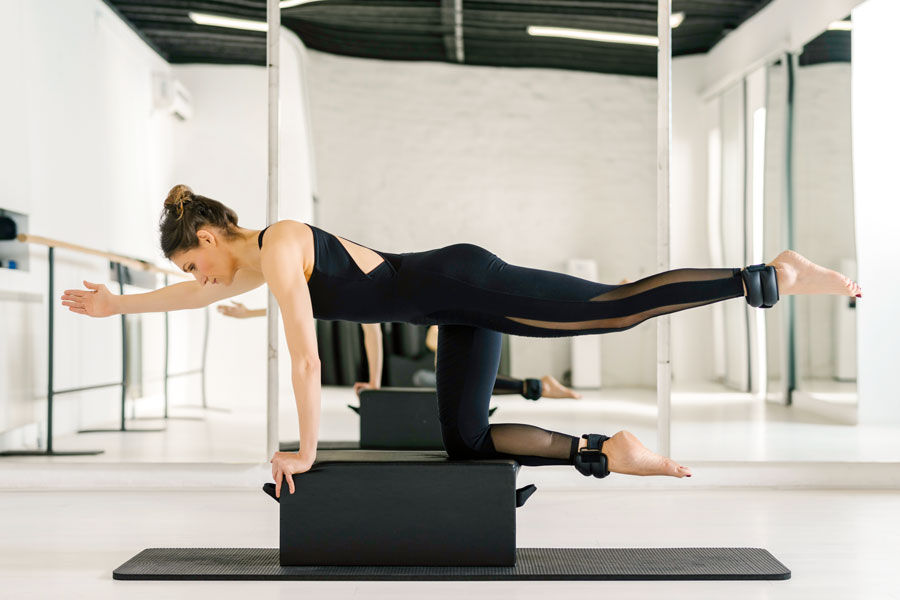
What to expect in a postpartum Pilates class
Most classes begin on the mat with foundational exercises. They may look simple, but they require focus and control.
If you’re practicing in a studio, you may also work on the reformer, which helps you deepen your connection to the center of your body with more precision.
The goal isn’t to push yourself—it’s to guide you toward safe, conscious movement.
When and where to practice postpartum Pilates
Once your doctor gives you the go-ahead —and you feel ready— you can begin. If you had a C-section, it’s common for providers to recommend waiting longer before doing deeper abdominal work.
As for where to practice, choose the environment that makes you feel supported:
At-home classes, with your baby nearby
Outdoor sessions
Studios that specialize in postpartum Pilates
At Mindbody CDMX, we adapt the Pilates repertoire to your recovery, your body’s history, and your level of comfort and safety.
📍 Córdoba 97A, Roma Norte, CDMX 📍 Tabasco 152, 2nd floor, Roma Norte, CDMX 💬 Book via WhatsApp → 55 7321 6082


Comments