


When Moving Hurts: Early Signs of Lower Back Pain
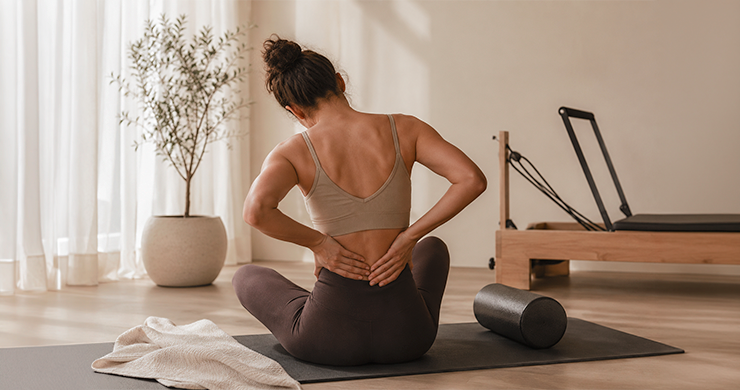
Sometimes it happens without warning.
You bend down to pick something up.
You get out of bed.Or you make an everyday movement… and suddenly, it’s there.
A sharp pain in your lower back.
The feeling that something “pulled.”
Movement becomes difficult.
Sitting down or standing up no longer feels simple.
What many people call lumbago often shows up just like this—suddenly, interrupting your routine and reminding you of something important:
your body has limits too.

What is lumbago, really?
Lumbago, or acute lower back pain, is usually related to a sudden muscle strain or overload in the spine.
It isn’t always serious, but it can be very limiting.
The pain may feel sharp or deep.
Sometimes it stays localized.
Other times, it can radiate down into the legs.
And even if it doesn’t look like “a big deal” at first, the truth is that it affects how you move, how you rest, and how you go about your daily life.
That’s why, rather than ignoring it or trying to “push through,” it’s worth listening to it.

When the body protects itself… and tightens
When pain appears, the body does what it knows best: it protects itself.
It tightens.
It limits movement.
It avoids.
The problem is that over time, this rigidity can maintain—or even increase—the discomfort.That’s where many people get stuck: afraid to move, yet feeling a back that grows stiffer by the day.
So the real question isn’t whether to move.
It’s how to return to movement.

Pilates as a gentle way back to movement
Pilates doesn’t push the spine.
It doesn’t force.
It doesn’t demand.
It works through stability, awareness, and controlled movement—exactly what matters when there’s lower back pain.
With gentle, well-guided exercises, Pilates helps to:
strengthen the deep muscles that support the lower back
improve mobility without impact
reorganize posture
restore confidence in movement
Movements like pelvic tilts, controlled spinal stretches, and conscious core work allow the back to stop carrying the load on its own.
It’s not about “fixing things fast.”
It’s about creating the conditions for your body to feel safe again.
Every back has its own story
Not all lower back pain is the same.
Not every body needs the same approach.
That’s why personalized work makes such a difference.
Listening to how the pain started.
Noticing which movements trigger it.
Understanding which positions bring relief.
When exercise adapts to the person—rather than the other way around—the body responds better.

Moving again without fear is part of healing
Lumbago isn’t a sign of weakness.
It’s a warning signal.
An invitation to look at how you move, how you support yourself, and how much you listen to your body.
At Mindbody, we support people through lower back pain with respect, progression, and genuine attention to the body. Each session adapts to where you are—without rush or unnecessary pressure.
If your lower back feels like it needs a different way of moving—more calm, more support—we’re here to walk that path with you.
📍 Roma Norte, Mexico City
🕰️ In-studio and beginner classes
💬 Book your session via WhatsApp: +52 55 7321 6082
Sometimes, the first step toward easing pain
isn’t doing more…
but learning to move better.


Comments